
For many visual artists, the prospect of AI integration sparks a mix of fascination and apprehension. Will AI replace human artistry? Or will it bring on a new era of creative opportunity?
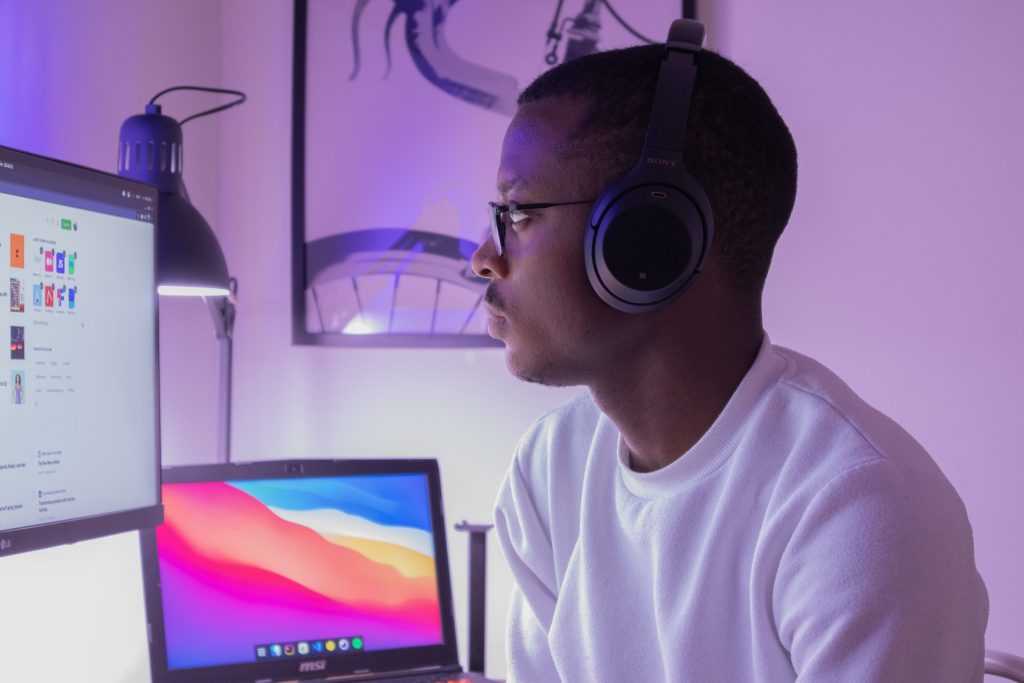
AI is functioning as an advanced tool that can expand the horizons of what’s possible. This article aims to cut through the noise, explore the real opportunities AI presents, address valid concerns you might have, and ultimately help you understand how to navigate this exciting new landscape. You’ll see how AI can boost your abilities, democratize creation, and open entirely new avenues for artistic expression and income. This isn’t just about understanding the tech—it’s about reimagining your creative potential.
AI as Your Creative Collaborator
Imagine having an assistant who can tirelessly generate ideas, visualize prototypes in seconds, and execute complex tasks with incredible precision. This is the essence of AI’s role as a creative collaborator. It’s here to augment your artistic process, allowing you to focus on your unique vision and narrative.
Supercharging Your Process
AI tools are quickly becoming invaluable partners in every stage of the creative journey. They act as tireless brainstorming companions, offering novel concepts and perspectives you might not have considered. When you’re looking for inspiration or trying to break through creative blocks, AI can rapidly generate visual prompts, mood boards, or even entire conceptual frameworks based on your initial input. This isn’t about replacing your imagination—it’s about turbocharging it, providing diverse starting points that can spark your next masterpiece.
Beyond initial ideation, AI excels in prototyping and iteration. Artists can leverage these tools to quickly visualize different compositions, color palettes, or stylistic approaches without the time-consuming effort of manual creation. This speed allows for rapid experimentation, enabling you to refine your concepts far more efficiently. For complex works, AI can handle intricate details, generate variations, and even assist with tedious tasks like background generation or texture mapping, freeing you to focus on the core artistic elements that demand your unique human touch.
Consider: Viewing AI as an extension of your creative toolkit—like a sophisticated brush, a new type of canvas, or an incredibly fast sketchpad. Experimentation is key; the more you explore its capabilities, the more seamlessly you can integrate it into your unique artistic process.
Exploring New Creative Horizons
One of the most notable aspects of AI in art is its capacity to help you explore entirely new aesthetic styles and push the boundaries of your creativity. Tools powered by AI can perform “style transfer,” applying the visual characteristics of one image to the content of another, or generate entirely new visuals based on textual prompts. This opens up avenues for creating art that merges disparate styles, invents novel visual languages, or explores conceptual themes through algorithmic aesthetics.
Perhaps you’ve always wanted to combine the brushstrokes of Van Gogh with the futuristic landscapes of science fiction, or generate abstract patterns that evolve based on complex mathematical principles. AI makes these explorations not only possible but relatively accessible. It can help you visualize concepts that might be beyond your current technical skills or simply too time-consuming to execute manually.
Try: Experimenting with different AI models and parameters. Each tool has its own strengths and nuances. By understanding how these algorithms interpret and generate visuals, you can gain greater control and fine-tune outputs to align precisely with your artistic vision. This iterative process of prompting, refining, and generating allows for an unprecedented level of creative exploration.
Democratizing Art & Sparking New Ideas
AI is not just changing how established artists create—it’s profoundly impacting who can create and what forms art can take. It’s sparking a creative renaissance by democratizing access and enabling entirely new, interactive experiences.
Lowering Barriers to Creating
The rise of generative AI tools has significantly lowered the barrier to entry for art creation. Individuals who might not possess traditional artistic skills—drawing, painting, sculpting, or even complex digital art software mastery—can now create visually appealing and thought-provoking works. With a simple text prompt, AI can translate ideas into images, allowing anyone with a vision to become a creator. This has led to an incredible surge in the creation and sharing of digital art across various platforms.
AI tools empower you to bring your visions to life, regardless of your traditional skill sets. They allow you to bypass the technical learning curve and jump straight into conceptualization and curation. For established artists, it means you can explore areas outside your primary medium without years of dedicated study. For emerging artists, it’s an invitation to join the creative conversation without intimidation.
Pioneering Interactive & Dynamic Art
Beyond static images, AI is enabling the development of entirely new art forms that are interactive and dynamic. This includes artworks that respond to real-time data, audience input, or environmental factors. Imagine a digital painting that subtly shifts its colors based on the local weather, or an immersive installation whose visuals evolve as viewers move through the space.
These new possibilities are opening up exciting avenues for immersive and participatory art experiences. AI can power generative art installations that continuously create unique patterns, sounds, or visuals, ensuring that no two viewing experiences are exactly alike. It allows for the creation of interactive digital experiences where the audience’s engagement directly influences the artwork’s unfolding narrative or aesthetic.
Consider: How AI can make your art responsive and engaging. Think about what kind of data could inform your work—perhaps biofeedback, social media sentiment, or live sensor data. Collaborating across disciplines, such as with coders or data scientists, can unlock significant potential for these cutting-edge art forms.
Navigating the Ethical & Legal Landscape
With any powerful new technology, important questions and challenges inevitably arise. AI in art is no exception, bringing with it a complex ethical and legal landscape that the creative community is actively navigating.
Authorship and Ownership
One of the central questions around AI-generated art is: Who is considered the author of an artwork created with AI? Is it the artist who provides the prompt and refines the output, the developers of the AI model, or the AI itself? This question has significant implications for copyright and ownership. Currently, many legal systems are grappling with these new definitions, often requiring a substantial element of human creativity and control for copyright protection.
Consider: Documenting your creative process meticulously. While AI generates, your intentionality, curation, selection, and refinement of the output are what inject the human element crucial for authorship. Staying informed about emerging legal frameworks and discussions around AI art will help you understand how your work might be protected and valued.
Ethical Data Sourcing & Algorithmic Bias
A major concern for artists globally is how AI models are trained. Many artists worry that their work may be used without their consent or proper compensation to train AI models, potentially devaluing their intellectual property. Algorithmic bias, where the training data reflects existing societal prejudices, can also lead to AI generating images that perpetuate stereotypes or lack diversity.
These concerns are valid and being actively discussed in the creative community. As an artist, you can be mindful of the tools you choose, prioritizing those from developers committed to ethical data practices. This is an area where collective artist advocacy is playing an important role in shaping industry standards.
Artistic Value & Authenticity
The question “What is the true artistic value of a work created with AI?” challenges traditional notions of creativity, skill, and the role of the artist. This perspective often overlooks the artist’s role in the AI-driven process. The skill shifts from manual execution to prompt engineering, curation, selection, refinement, and injecting profound conceptual meaning.
Your unique vision, your discerning eye, and your intentionality remain central to your work. AI is a tool, and like a camera, a synthesizer, or a digital painting tablet, it requires a human artist to imbue it with meaning, purpose, and a distinctive voice. The authenticity lies not just in the method of creation, but in the story, the concept, and the emotion you convey through your chosen medium.
Monetizing Your Vision: New Avenues for Income
While concerns about AI’s impact on income are real for some artists, the landscape is also rapidly expanding with new opportunities for monetization. The market is transforming, creating new possibilities for those who choose to explore them.
Emerging Marketplaces & Platforms
Just as social media platforms reshaped how artists connect with audiences, dedicated marketplaces for AI-generated art are emerging, alongside the integration of AI art categories on established platforms. These new avenues provide direct channels for artists to showcase and sell their AI-assisted creations, reaching a global audience interested in innovative digital art.
Consider: Exploring platforms specifically designed for AI art, or advocating for its inclusion on your preferred sites. Being an early adopter in these spaces can provide advantages in visibility and sales.
Diversifying Your Artistic Business Model
AI allows you to diversify your artistic business model in several ways:
- AI-Assisted Commissions: Offer clients unique AI-generated concept art, personalized portraits, or fantastical landscapes where the human touch guides the machine.
- Unique Digital Assets: Create and sell AI-generated textures, patterns, characters, or environment concepts for game development, virtual reality, or other digital media.
- Prints and Merchandise: Transform your stunning AI-assisted digital works into physical prints, apparel, or other merchandise.
- Educational Workshops: Teach other artists how to effectively use AI tools, positioning yourself as an expert in this evolving field.
Consider: Developing a strategic approach to integrate AI into your offerings. Think about how your unique human-AI collaborative process adds value and stands out in the market.
Adapting & Thriving in the AI Future: Your Creative Edge
The future of art will likely involve AI, and those who embrace it strategically may find themselves with a significant creative edge. This isn’t about becoming a “machine artist,” but about evolving your practice to leverage powerful tools while amplifying your irreplaceable human qualities.
Lifelong Learning & Skill Development
Just as digital painting required learning new software, AI in art demands a new set of skills. Art schools and university art departments are increasingly integrating AI into their curricula, teaching students how to use AI tools ethically and creatively. This signals that mastering AI is becoming a relevant competency for the next generation of artists.
Consider: Embracing continuous learning as a vital part of your artistic journey. Seek out online courses, workshops, and tutorials focused on AI art. Understanding prompt engineering, model selection, and post-processing techniques can help you create more precise and powerful artistic output.
The Artist’s Enduring Role: Vision, Curation, and Intent
Even with sophisticated AI, the artist’s role remains central. AI is a tool; you are the director. The development of more sophisticated and controllable AI models is giving artists greater creative control over the output, allowing you to fine-tune the aesthetics and style of generated images to match your artistic vision with increasing accuracy.
Your vision, your ability to curate, and your intent are the irreplaceable elements. You decide what story to tell, what emotion to evoke, and what aesthetic direction to pursue. AI executes, but you envision and guide.
Focus on: Developing your unique artistic voice and narrative. Let your human experience, perspective, and conceptual depth shine through your AI-assisted works. The more distinctive your artistic identity, the more valuable your creations can be, regardless of the tools used.
Building a Collaborative Community
The world of AI art is vibrant and rapidly evolving, and community plays a key role. Engaging with fellow artists, developers, and thinkers in this space can provide valuable insights, support, and opportunities. Sharing knowledge, participating in discussions about ethical guidelines, and collectively exploring the potential of this new frontier can accelerate growth and learning.
Collaboration and shared learning can help address challenges, discover new techniques, and shape a more equitable future for AI in art.
The Dawn of a New Era of Creativity
The integration of AI into visual art represents a significant shift in how art can be created and experienced. While questions remain about authenticity, ownership, and the future of artistic practice, AI offers a powerful set of tools that can amplify creativity, expand reach, and open up new opportunities for artistic expression and economic growth.
The canvas of tomorrow is not defined by traditional limitations but by the possibilities that emerge when human ingenuity collaborates with artificial intelligence. Approaching this technology with curiosity, careful consideration, and an open mind can help you navigate this evolving landscape. Your potential as an artist in this new era is shaped by how you choose to adapt, experiment, and apply your unique vision to these emerging tools.