
Published Oct 5, 2026 Updated Oct 13, 2026 5 min read


Most people picture a recruiter as the person who sends the job offer. Kenny Bores does that part too, and he loves it. But a lot of his week is paperwork, scheduling, and reading applications.
Kenny is a senior recruiter at Sports Media Technology (SMT), the company behind many of the graphics, stats, and game clocks you see during broadcasts like Thursday Night Football, NASCAR, and March Madness. In this Real Careers, Real Journeys™ conversation, he joined a live classroom of young people to share what the job looks like day to day, and how a path he never planned ended up fitting him.
Watch the Full Conversation
The Job Behind the Job
Kenny’s first career plan came from a movie. After watching Jerry Maguire, he wanted to be a sports agent. That didn’t happen, but he still gets to hire people into sports careers.
He calls himself the assist person, the one who passes the ball to someone else who scores. At SMT, he handles staffing and hiring across four divisions in North America, and he is part of the process for every person who joins the team.
A typical week can include new hire orientation, scheduling interviews, running first interviews, and reviewing hundreds of applicants. He also manages the internship program and visits colleges and high schools to share hiring tips.
Then there’s the part no movie would film. Offer letters. I-9 forms. Calendar puzzles to get everyone on the same call. Kenny is upfront about it: “a lot of what I do is paperwork.”
The Boss Who Pushed Him
Kenny didn’t plan on human resources. He spent most of his twenties teaching and coaching. When a boss suggested he move into HR, he told her it was a terrible idea.
“She told me, I believe in you, and I think you’ll do great, and you’re going to start doing that on Monday.”
That push led to the job he has now. His advice to young people is to listen to mentors who have your best interests at heart, and to try things outside your comfort zone. He also learned that skills carry over. Coaching and working with young people taught him how to read different styles and stories, and that still shapes how he hires.
What He Looks For
Kenny says you could ask 100 recruiters how to stand out and get 100 different answers. These are the things he notices.
He reads your answers before your resume. When a job gets lots of applicants, he checks if you answered the questions fully and honestly. “Why are you interested in this opportunity?” is the one he cares about most. He wants to hear your real reason.
He can spot a copy-and-paste AI answer. Kenny uses AI himself, for things like building slides and checking the tone of a message. He says it’s great for saving time. But the final hiring decision always comes from people, and he has seen applications with the prompt still left in. Use AI as a helper, then add your own voice.
He values effort. If there’s an internship you really want, he suggests reaching out on LinkedIn or by email. Save that extra step for your top five, so you don’t burn out.
He looks for resilience. Someone applying for an engineering job might tell a story about overcoming something that has nothing to do with engineering. Kenny says that counts. “That’s a life skill, and that translates to pretty much any job anywhere.”
Skills That Matter Most
Kenny’s top skills for a recruiter are humility, being genuine, staying organized, and being ready to change plans when the schedule shifts. He also says listening matters as much as talking, and you don’t have to be an extrovert to be a good recruiter.
On the tools side, he says most recruiting software, like applicant tracking systems, is hard to try before you have a job. The good news is that once you learn one, the others feel similar.
There is no required degree for recruiting. Kenny learned on the job, took courses through the Society for Human Resource Management, and keeps a folder of newsletters to read each week.
The Hard Part, and the Good Part
The hardest part of Kenny’s job is giving bad news to great candidates. When three strong people apply for one role, two of them will hear no.
The best part is the stories. He told us about a former intern who is now working on Thursday Night Football. He gets photos from people he hired when they get engaged. As he puts it, “I just scheduled your interview. You did all the hard work.” But he knows he got to be a small part of someone’s life story.
His Advice to His Younger Self
When asked what he would tell his middle or high school self, Kenny joked about starting a 401(k) early. Then he got serious:
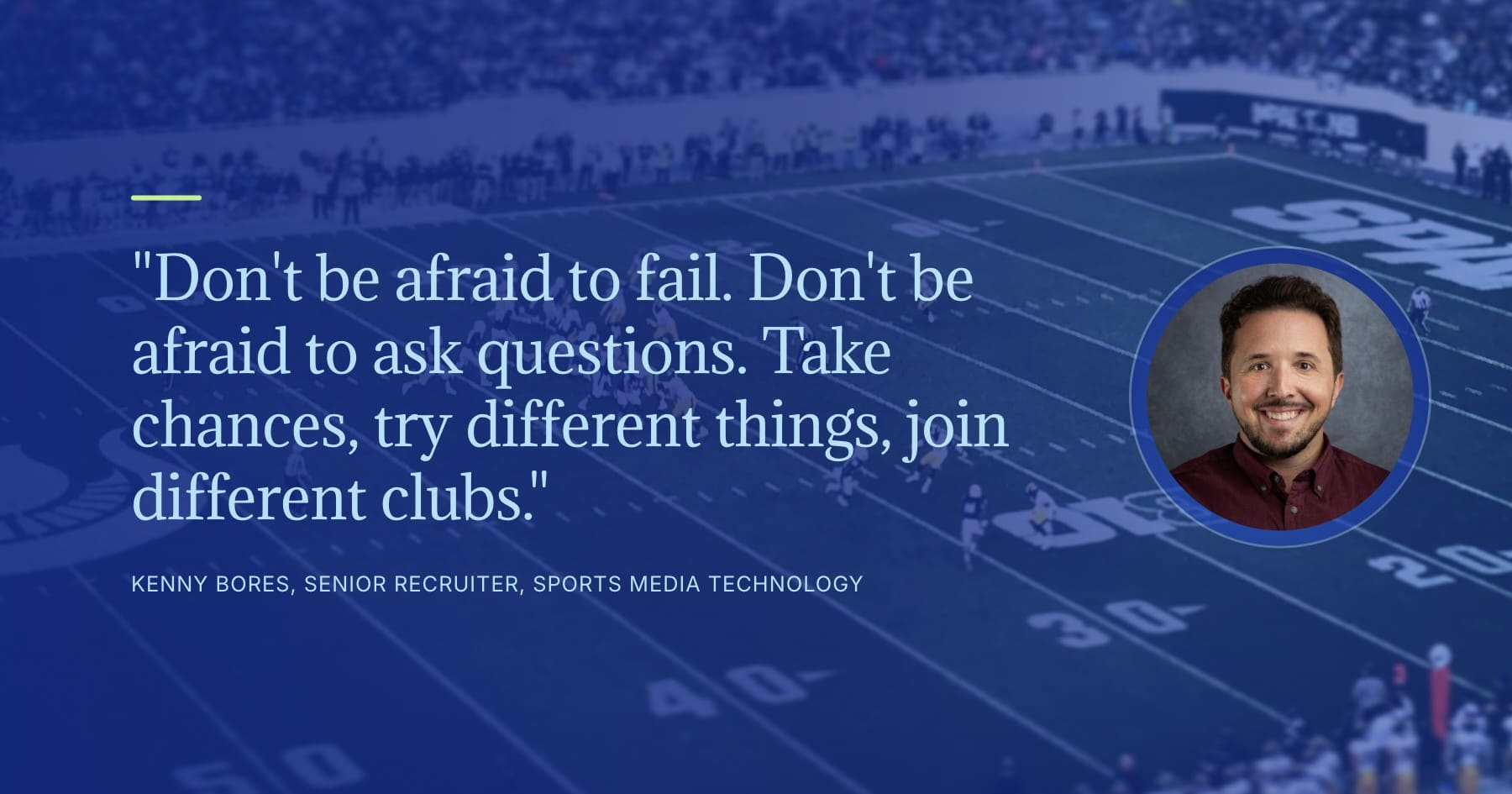
“Don’t be afraid to fail. Don’t be afraid to ask questions. Take chances, try different things, join different clubs.”
If you already know you want to be an engineer, go be an engineer. If you’re not sure, try something new for a year or two. You might end up enjoying something you never thought you’d do.
Be the Person Young People Hear From Next
Kenny’s story landed because he was honest. He talked about the boring parts, the hard parts, and the moment he almost said no to the job that shaped his career. Young people got to ask real questions and hear real answers from someone doing the work.
A young person is out there right now wondering what your job is actually like. Real Careers, Real Journeys™ connects industry professionals with young people for live career conversations. No presentation needed. Just your story.